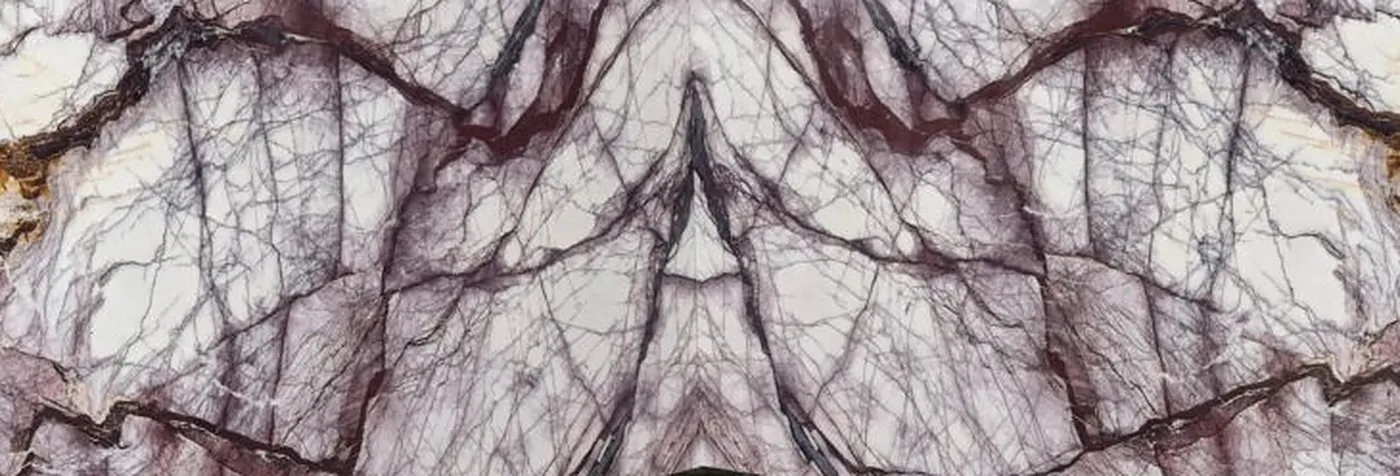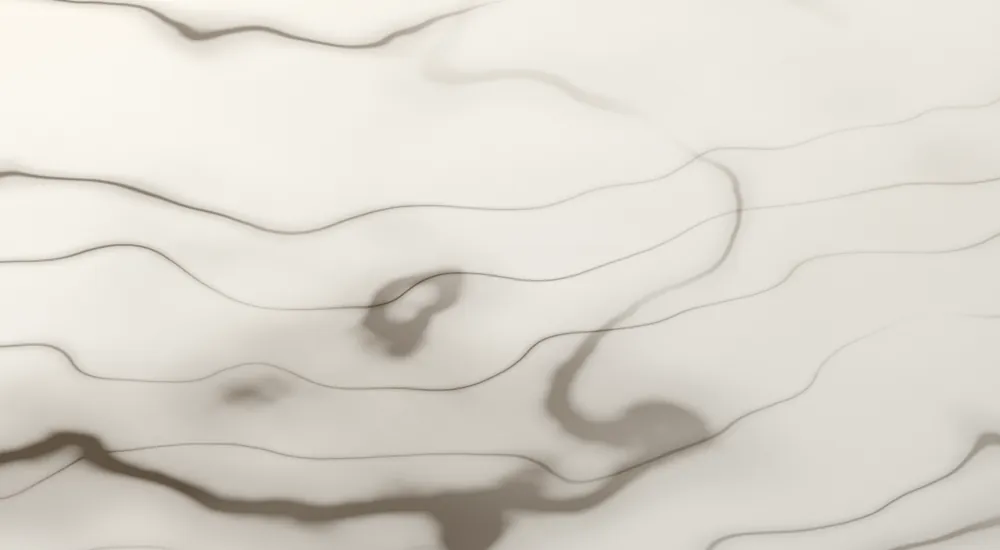
Carrara, Calacatta and Statuario are the three names most people reach for when they want a white marble. They come from the same mountains, but they look different, cost different amounts and suit different jobs. Knowing which is which saves a lot of confusion at the slab yard.
Same mountains, different stone
All three are classic Italian white marbles from the Apuan Alps around Carrara, in Tuscany. The names describe how the stone looks, more than one exact quarry. That is why two slabs sold as Calacatta can look quite different, and why the slab in front of you matters more than the name on the label.
Carrara
Carrara has a white to soft grey background with fine, feathery grey veining spread fairly evenly across the slab. From a distance it reads as a calm, light grey surface.
- The most widely available of the three
- Usually the most affordable
- Even pattern, so it suits large floors, bathrooms and repeated pieces
- Small pieces and offcuts match each other easily
Calacatta
Calacatta has a brighter, whiter background with bolder, thicker veins, often grey with warm gold or beige tones. The veining is more dramatic and less even than Carrara.
- Rarer, with a higher price per slab
- Chosen for kitchen islands, feature walls and bookmatched panels
- Strong veins mean slab selection and layout matter a great deal
- Many trade names exist, such as Calacatta Oro or Calacatta Borghini, each with its own character
Statuario
Statuario has a very white background with striking grey veins, usually fewer and more defined than Calacatta. It is the stone of classical sculpture, and the rarest of the three.
- Typically the most expensive
- Limited availability, so large projects need early block reservation
- Best used where it can be seen: statement walls, vanities, fireplaces
Side by side
| Carrara | Calacatta | Statuario | |
|---|---|---|---|
| Background | White to soft grey | Bright white | Very bright white |
| Veining | Fine, soft, even | Bold, thick, often gold or grey | Striking grey, defined |
| Availability | Widely available | Limited | Rare |
| Relative cost | Lowest | Higher | Highest |
| Typical use | Floors, bathrooms, large areas | Islands, feature walls, bookmatch | Statement pieces, vanities |
All three are calcite marbles. They perform the same way in use: they can etch from acids and stain if not sealed. Our guide to marble countertops explains what that means in a kitchen.
How to specify and buy white marble
- Choose from the actual slabs, not a name or a small sample. Veining changes slab by slab.
- Ask for numbered photos or video of the whole slab, in daylight, at the same scale.
- For islands and walls, plan the cut on the slab photos so the best veining lands where it is seen.
- For bookmatched work, reserve consecutive slabs from the same block.
- Check thickness, flatness and any resin or mesh on the back before cutting. See our slab inspection checklist.
- Agree finish (polished or honed) on a sample of the real stone.
White marble from Turkey
Italian names lead the market, but Turkey is one of the largest marble producers in the world and has its own white and veined marbles, often at a lower price and in good volumes. For many projects the right approach is to compare slabs side by side: an Italian Calacatta, and a Turkish white with similar movement. You choose by what you see, not by the label.
Marble Technic selects slabs in Turkish yards and factories for clients in the UK, the US and beyond, with numbered photos, video and layouts before anything is cut. See our marble range or browse the catalogue.
Frequently asked questions
- What is the difference between Carrara and Calacatta marble?
- Carrara has a white to grey background with fine, soft, even veining and is widely available. Calacatta has a brighter white background with bolder, thicker veins, often with gold tones, and is rarer and more expensive.
- Which is more expensive, Calacatta or Statuario?
- Statuario is usually the most expensive of the three because it is the rarest. Calacatta is next, and Carrara is the most affordable.
- Is Calacatta marble good for kitchen countertops?
- Yes, it is widely used for islands and worktops. Like all calcite marbles it can etch and stain, so choose the finish carefully and seal it.
- Are there alternatives to Italian Calacatta?
- Yes. Turkey and other countries produce white and veined marbles with similar movement, often at a lower price. Compare actual slabs side by side before deciding.
Questions about your projectinfo@marbletechnic.com
Related material: Turkish Marble
More articles: Marble vs Quartzite Countertops: Which Is Better for a Kitchen? · Marble Countertops: Pros, Cons, Etching, Sealing and Finishes · How to Import Travertine from Turkey: A Guide for UK and US Buyers · Turkish vs Italian Travertine: What Specifiers Should Compare · ASTM vs EN: Natural Stone Standards for UK and US Projects · Technical Support for Marble Projects: Working With a Team in Turkey · Vein Cut vs Cross Cut Travertine: How to Specify Cut Direction · What to Check on a Natural Stone Slab Before It Is Cut · How to Read a Natural Stone Shop Drawing: A Guide for Designers · Quartz vs Porcelain Countertops: A Technical Comparison