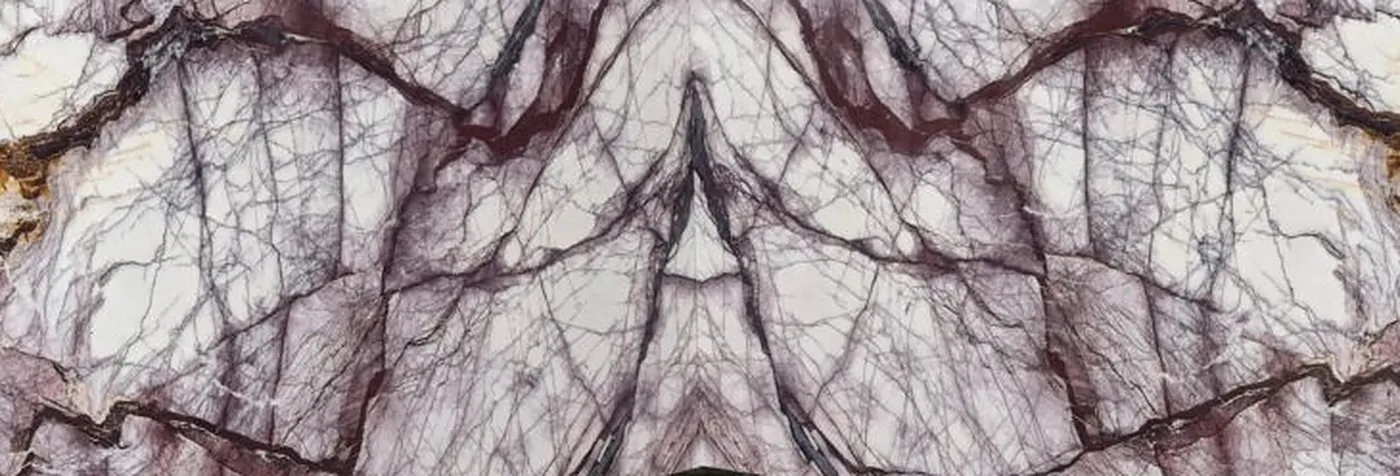
Quartzite is often sold as the stone that looks like marble but behaves better in a kitchen. That is true for real quartzite. The problem is that not every stone sold as quartzite is one, and the difference only shows after the first glass of wine.
What each stone is
Marble is a metamorphic rock made mostly of calcite or dolomite. It is relatively soft and reacts with acids.
Quartzite is a metamorphic rock formed from quartz sandstone. It is made mostly of quartz, which is very hard and does not react with household acids.
Both can show white backgrounds and strong veining, which is why they are often compared for the same kitchen.
Hardness and scratching
On the Mohs scale, calcite is 3 and quartz is 7. In practice:
- A steel knife can scratch marble.
- Real quartzite resists scratching from knives and everyday use, and is harder on knife edges.
- Because it is so hard, quartzite is slower to cut and polish, which can add to fabrication cost.
Etching and staining
These are two different things, and people often mix them up.
- Etching is a dull mark where acid (lemon, vinegar, wine, some cleaners) has reacted with calcite. Marble etches; real quartzite does not. Etching is most visible on polished marble.
- Staining is colour soaking into the stone, from oil, coffee or wine. Both stones can stain if they are porous and not sealed. Some quartzites are more porous than people expect.
Side by side
| Marble | Quartzite | |
|---|---|---|
| Main mineral | Calcite (or dolomite) | Quartz |
| Hardness (Mohs) | About 3 | About 7 |
| Etches from acids | Yes | No (real quartzite) |
| Stains | Can stain; seal it | Can stain; seal it |
| Heat | Good, but use trivets | Good, but use trivets |
| Fabrication | Easier to cut and polish | Harder, slower, often costlier |
| Look | Soft, classic, deep veining | Often crisper, glassier, with movement |
The soft quartzite problem
Some stones sold as quartzite are actually marble or dolomite. Dolomite is harder than calcite marble but still much softer than quartz, and it can etch. If a kitchen is designed around quartzite's durability, this matters.
Two simple tests on an offcut or a sample from the actual slab:
- Glass test: press a sharp corner of the stone firmly across a glass tile. Real quartzite scratches glass. Marble and dolomite do not.
- Acid test: leave a few drops of lemon juice or vinegar on a polished area for about ten minutes, then wipe. A dull mark means the stone etches.
Test on the real material, not a brochure sample, and do it before you approve the slabs.
Which one to choose
- Choose marble if you love its depth and are happy with a surface that ages with use, or choose a honed finish, which hides etching better.
- Choose quartzite if you want a natural look with less maintenance in a busy kitchen, and verify it is real quartzite.
- Consider engineered options where neither fits. See our quartz vs porcelain comparison.
When we select slabs in Turkey, we can run the glass and acid tests on the actual material and record the results with photos, before anything is cut. See our countertop service.
Frequently asked questions
- Is quartzite better than marble for kitchen countertops?
- Real quartzite is harder and does not etch from acids, so it usually needs less care in a busy kitchen. Marble is softer and etches, but many people choose it for its look and accept the patina.
- Does quartzite stain?
- It can. Some quartzites are porous, so they should be sealed like marble. What quartzite does not do is etch.
- How can I tell if a stone is real quartzite?
- Try to scratch glass with a sharp corner of the stone: real quartzite scratches glass. Then put lemon juice or vinegar on a polished area for about ten minutes: if it leaves a dull mark, the stone etches and is not true quartzite.
- What is the difference between etching and staining?
- Etching is a dull mark caused by acid reacting with calcite in the stone. Staining is colour soaking into the stone. Marble can do both; real quartzite can stain but does not etch.
Questions about your projectinfo@marbletechnic.com
Related material: Turkish Marble
More articles: Carrara vs Calacatta vs Statuario Marble: How to Tell Them Apart · Marble Countertops: Pros, Cons, Etching, Sealing and Finishes · How to Import Travertine from Turkey: A Guide for UK and US Buyers · Turkish vs Italian Travertine: What Specifiers Should Compare · ASTM vs EN: Natural Stone Standards for UK and US Projects · Technical Support for Marble Projects: Working With a Team in Turkey · Vein Cut vs Cross Cut Travertine: How to Specify Cut Direction · What to Check on a Natural Stone Slab Before It Is Cut · How to Read a Natural Stone Shop Drawing: A Guide for Designers · Quartz vs Porcelain Countertops: A Technical Comparison