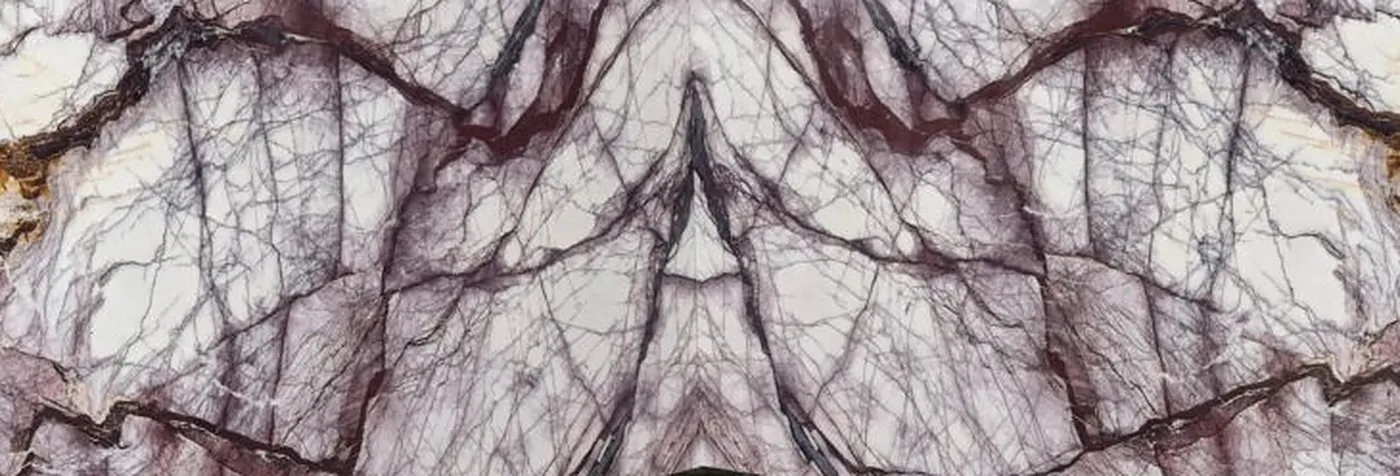
Italian travertine carries the name; Turkish travertine supplies much of the market. For a specifier in London or New York, the useful question is not which country is better, but which stone, from which quarry and lot, suits this project.
Where each comes from
Italian travertine is best known from the Tivoli area near Rome, the source of Roman travertine (Travertino Romano) used since antiquity and sold under trade names such as Navona. It is typically a warm cream to light beige stone.
Turkish travertine comes mainly from western Turkey, with the Denizli region the best-known centre of quarrying and processing. Turkey offers a wider spread of colours from one region, from light classic and ivory to noce, silver and multicolour mixes.
Appearance and colour range
Both countries produce beautiful stone, and both produce poor stone. Within each, colour and hole structure change from quarry to quarry and from bench to bench in the same quarry.
- Colour range: Turkey offers more distinct colour families, including silver and noce, which are central to many contemporary schemes.
- Character: Roman travertine is valued for its classic, warm, even look, especially vein cut.
- Cut: both are produced vein cut and cross cut, and the cut changes the look more than the country does.
Availability and volume
Turkey's travertine industry is large and export-oriented, with many factories set up to produce standard tile, paver and coping formats in volume. That makes it practical to source large floor areas, pool decks and phased projects from one region, and to reserve blocks for tone consistency.
Italian travertine is more often specified for prestige projects where the origin itself is part of the brief.
Cost
Turkish travertine is often more competitively priced for comparable formats, which is one reason it dominates the tile and paver market in the UK and the US. Cost, however, depends on the grade, the cut, the format, the finish and the order size more than on the country. Compare like with like: the same size, thickness, finish, fill and sorting standard.
How to judge quality, wherever it comes from
| Check | What to look for |
|---|---|
| Current sample | From the lot or blocks you will receive, not an old showroom board |
| Tone consistency | Variation across a batch, ideally seen as a laid-out mock-up or photos of many pieces |
| Holes and fill | Size and density of holes; quality and colour of the fill |
| Calibration | Thickness tolerance across pieces, which affects installation cost |
| Test data | Water absorption, flexural strength, frost and slip resistance for exterior or commercial use |
| Inspection | Pieces checked against the sample before packing |
For exterior and commercial floors, the test data matters more than the origin. See ASTM and EN standards for natural stone for what to request.
When to choose which
- Choose by origin when the brief or the client specifically calls for Italian Roman travertine.
- Choose by colour when the scheme needs silver, noce or a specific warm classic tone; Turkey offers more options.
- Choose by volume and budget for large floors, pool decks and phased supply, where Turkish production and block reservation help.
Whichever you choose, the result depends on sample approval and inspection before shipping. Marble Technic handles sourcing, selection and pre-packing quality control for travertine from Turkey, for clients in the UK, the US and beyond. Our guide to importing travertine from Turkey covers the full process.
Frequently asked questions
- Is Italian travertine better than Turkish travertine?
- Not as a rule. Both countries produce high and low grades. Quality depends on the quarry, the bench, the factory's sorting and the inspection before shipping, so compare current samples and test data rather than origin.
- Why is Turkish travertine cheaper?
- Turkey has a large, export-oriented travertine industry producing standard formats in volume, which often makes it more competitively priced for comparable sizes and finishes.
- Where does Turkish travertine come from?
- Mainly western Turkey, with the Denizli region the best-known centre for travertine quarrying and processing.
Questions about your projectinfo@marbletechnic.com
Related material: Turkish Travertine
More articles: Carrara vs Calacatta vs Statuario Marble: How to Tell Them Apart · Marble vs Quartzite Countertops: Which Is Better for a Kitchen? · Marble Countertops: Pros, Cons, Etching, Sealing and Finishes · How to Import Travertine from Turkey: A Guide for UK and US Buyers · ASTM vs EN: Natural Stone Standards for UK and US Projects · Technical Support for Marble Projects: Working With a Team in Turkey · Vein Cut vs Cross Cut Travertine: How to Specify Cut Direction · What to Check on a Natural Stone Slab Before It Is Cut · How to Read a Natural Stone Shop Drawing: A Guide for Designers · Quartz vs Porcelain Countertops: A Technical Comparison