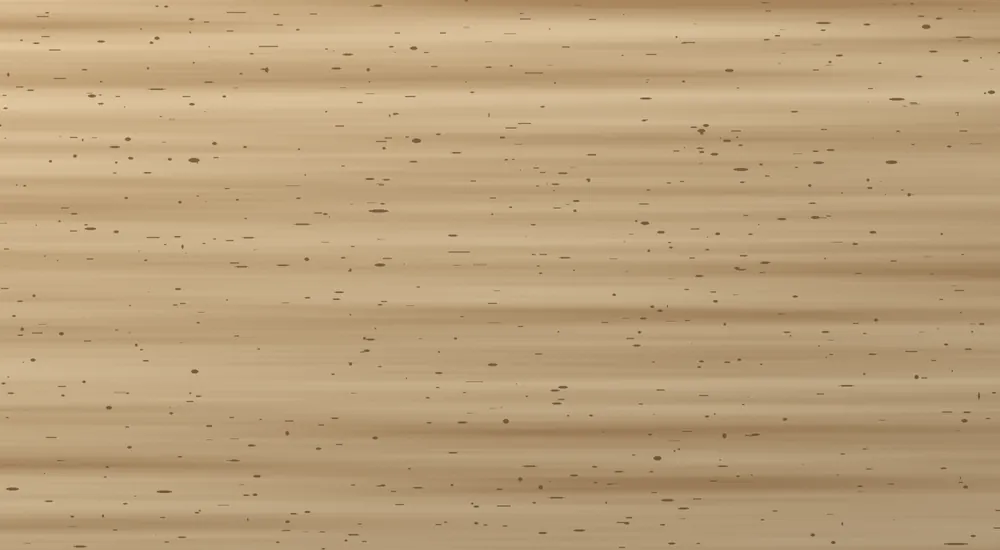
The same block of travertine can produce two very different surfaces. Which one you get depends on the direction the block is cut, and that decision has to be written into the specification long before the saw starts.
How travertine forms, and why direction matters
Travertine is a limestone deposited by mineral springs. It builds up in layers over long periods, trapping gas and plant matter that later leave the characteristic holes and voids. Those layers, called the bedding, run through every block that comes out of the quarry.
When a block is sawn into slabs, the saw either crosses the bedding or follows it. The stone is identical in both cases. Its appearance on the finished surface is not.
Vein cut travertine
Vein cut means the block is cut across the bedding, so each slab shows the layers edge-on as linear bands. The result is directional, with parallel stripes running along the length of the piece.
- Strong linear pattern that reads clearly from a distance
- Works well on long walls, façades and floors where the lines lead the eye
- Direction is visible, so every piece must be installed the same way
- Joints are more noticeable if bands do not continue across them
Cross cut travertine
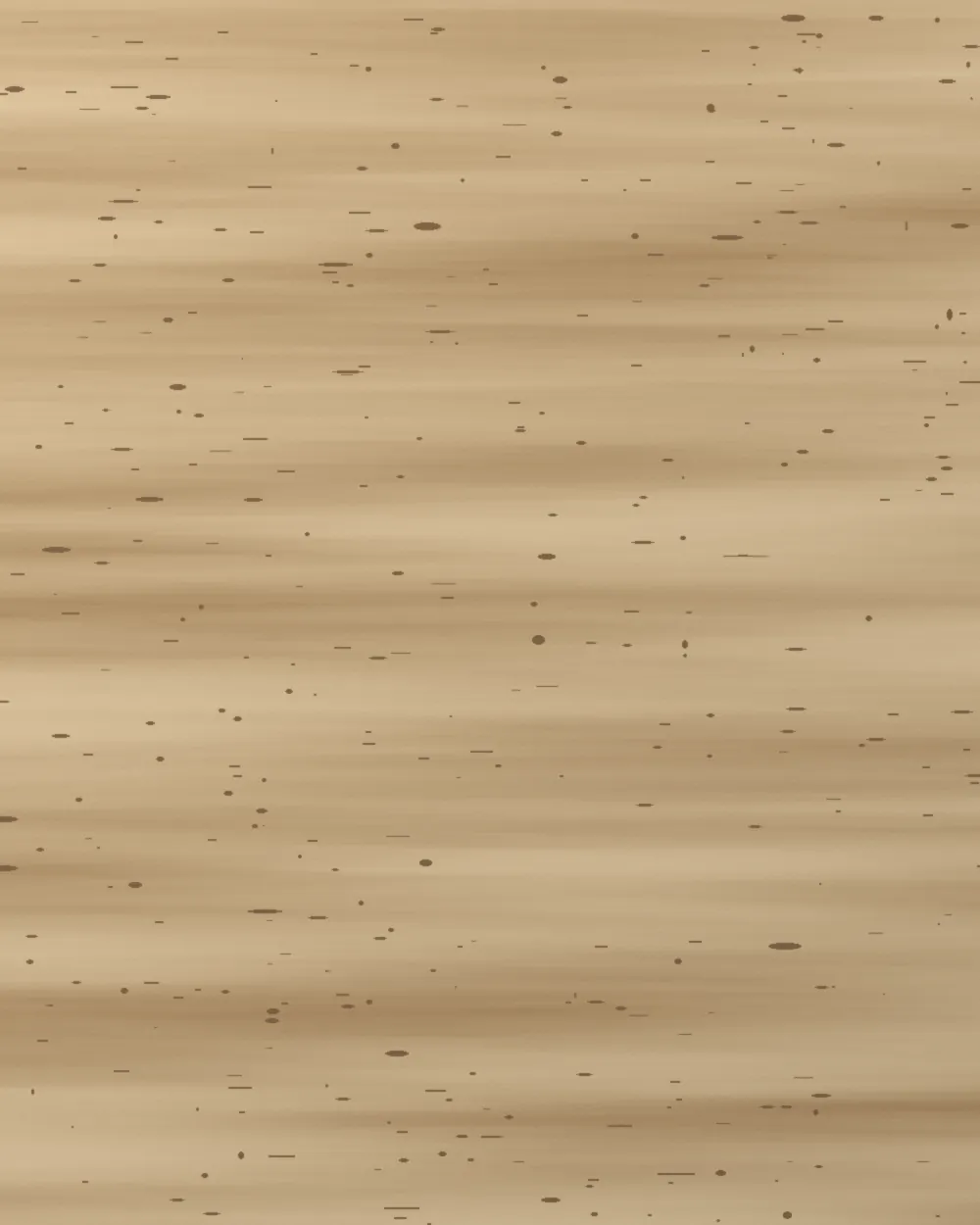
Cross cut, sometimes called fleuri cut, means the block is cut parallel to the bedding. The slab face shows the layers from above, giving a softer, cloudy pattern without a strong direction.
- Non-directional, calmer appearance
- Joints are less visible over large floor areas
- More forgiving when pieces are rotated or mixed during installation
- Natural holes can appear rounder and more evenly spread

Choosing between them
| Consideration | Vein cut | Cross cut |
|---|---|---|
| Appearance | Linear, directional | Cloudy, non-directional |
| Typical use | Feature walls, façades, corridors | Large floors, bathrooms, terraces |
| Installation | Direction must be controlled | More tolerant of rotation |
| Drawing requirement | Direction arrow on every piece | Direction usually optional |
Neither cut is better in general. The right choice depends on the space, the size of the pieces and how much visual movement the design can take.
Fill and finish
Cut direction is only one part of the specification. Travertine is usually supplied either filled, with its natural holes closed using resin or cement, or unfilled. Filled travertine gives a smoother surface for interiors. Unfilled and tumbled travertine is often chosen for exteriors and pool surrounds.
Common finishes are honed, brushed, tumbled and polished. The fill colour should be approved on a physical sample, because a fill that looks neutral in a photograph can read darker or lighter once installed.
Exterior use
For terraces, façades and pool areas, appearance is not enough. Ask for test data from the actual production lot, typically including water absorption (EN 13755), flexural strength (EN 12372), frost resistance (EN 12371) and, for floors, slip resistance measured with the pendulum test (EN 14231). Requirements depend on the climate and use, so the results should be reviewed by the project team.
How to specify it
- Name the stone and reference an approved sample, for example classic, silver or noce travertine.
- State the cut: vein cut or cross cut.
- State the fill (filled or unfilled) and approve the fill colour on a sample.
- State the finish, thickness and piece sizes.
- For vein cut, show a direction arrow on every piece in the shop drawings and ask for it to be marked on the back of each piece.
- For larger or phased projects, reserve blocks from the same bench so tone stays consistent between deliveries.
- Agree how pieces will be inspected before packing, including direction, fill quality and calibration.
Denizli, in western Turkey, is one of the best-known travertine regions. Classic, silver and noce travertines are produced there in both vein cut and cross cut.
Questions about your projectinfo@marbletechnic.com
Related material: Turkish Travertine
More articles: What to Check on a Natural Stone Slab Before It Is Cut · How to Read a Natural Stone Shop Drawing: A Guide for Designers · Quartz vs Porcelain Countertops: A Technical Comparison